
There is no shortage of AI conferences. Most promise access to the same ideas, the same companies, and the same conversations about what comes next. Some are built around enterprise sales. Others go so deep into one technical niche that much of the program becomes irrelevant to anyone outside it.
The harder question is whether an event will help attendees do their work better.
The AI Conference 2026, taking place September 29 through October 1 in San Francisco, is built around that question. Its program brings together the technical, operational, and strategic sides of AI, with a clear focus on how systems are researched, built, deployed, and scaled.
That makes it worth a closer look.
The AI Conference brings together engineers, researchers, founders, investors, product leaders, and executives from across the AI ecosystem. These groups may approach the field from different angles, but they are often working through the same underlying problems.
How should an agentic system be evaluated before deployment? What infrastructure can support it at scale? Where does defensibility come from when foundational models are widely available? How should a company measure whether an AI initiative is creating real value?
Those questions rarely belong to one department. Bringing technical and business perspectives together creates more useful conversations than separating them into isolated tracks or events.
AI projects rarely stay within a single discipline. A new application may depend on model capabilities, infrastructure, data, security, product design, organizational adoption, and a credible business case. The five-track program reflects that overlap.
AI Frontiers covers emerging research, new model capabilities, multimodal systems, safety, and governance. The track is intended for attendees following the developments that could shape the next generation of AI systems.
AI Builders focuses on implementation. Sessions explore agentic systems, fine-tuning, evaluations, application development, and the methods teams are using to turn promising concepts into working products.
The AI Stack examines the infrastructure required to operate AI systems in production. Topics include inference, deployment, orchestration, observability, MLOps, and performance.
Applied AI looks at what happens after experimentation. The track focuses on deployed systems, workflow automation, integration, and the lessons teams learn while operating AI in real environments.
AI Strategy addresses adoption, governance, security, operating models, return on investment, and organizational transformation.
The value of this structure is flexibility. Attendees can go deep within their discipline while still following the adjacent decisions that affect their work.

The most distinctive part of the event may happen before the main conference begins.
Day ZERØ is a limited-capacity pre-conference program built around workshops, smaller groups, and AI Hack Day. Attendance is capped at 300 people, creating a more focused environment than the main conference floor.
The workshops give attendees the opportunity to work directly with tools and implementation methods. AI Hack Day adds a different kind of pressure: teams must move from an idea to a working application within a single day.
That format exposes the decisions that polished case studies often leave out. Teams have to choose an approach, work through constraints, test assumptions, and produce something functional.
For engineers and technical leaders, that process can be more useful than another hour of broad predictions about the future of AI.
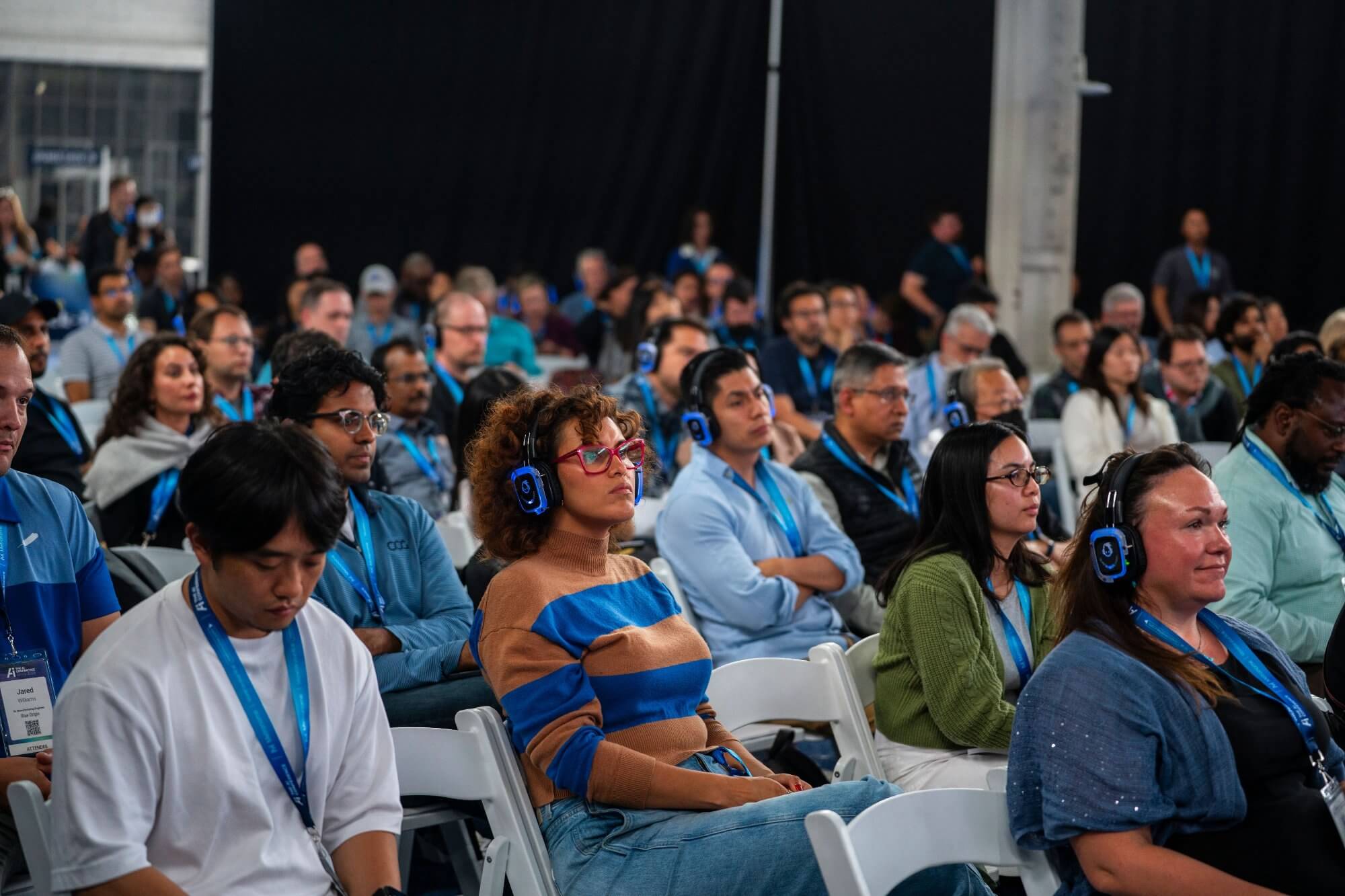
Approximately 5,500 attendees are expected at The AI Conference 2026.
That is large enough to bring together people from different industries, disciplines, and stages of company growth. It also gives attendees more opportunities to find others working on similar technical or organizational problems.
The program extends beyond scheduled sessions.
The Innovation Hub will feature more than 100 AI companies. Startup Showdown will bring eight early-stage startups onstage to pitch before attendees and active investors. Ignite Talks will give speakers 20 slides at 15 seconds per slide to make a focused argument quickly.
Party in the Park provides a less structured setting for conversation, while AI Week connects attendees with additional events taking place across San Francisco.
These formats matter because some of the most useful information at a conference rarely appears on a slide. It comes from comparing notes with someone who has already tried the same approach, faced the same deployment problem, or made the same mistake.
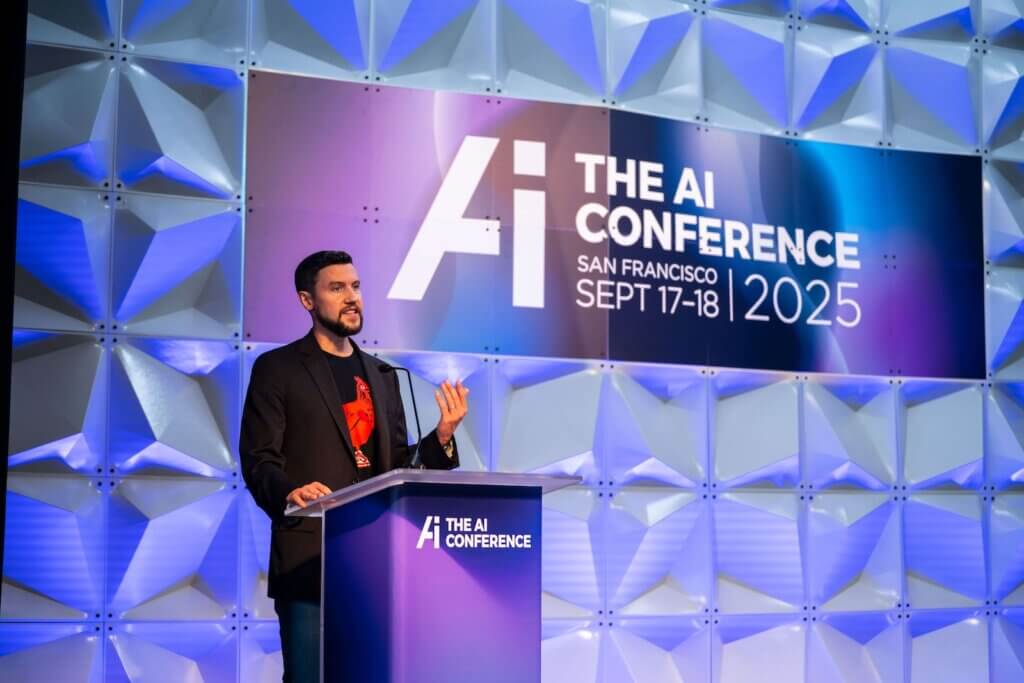
The 2026 program includes 130 speakers from across the AI ecosystem.
The range is important. Strong AI events need more than prominent names or a narrow collection of model researchers. They also need practitioners who can explain what happened when a system met real users, production constraints, compliance requirements, or business expectations.
A useful speaker program should leave attendees with more than a list of trends. It should offer implementation details, failed assumptions, operating lessons, and a clearer understanding of what can be applied elsewhere.
That is the standard by which the lineup should be judged.
The AI Conference is most relevant to people whose work involves making consequential decisions about AI.
That includes engineers building applications or infrastructure, researchers studying new capabilities, founders developing AI companies, product leaders responsible for deployment, investors evaluating the market, and executives shaping adoption strategy.
It is also suited to people whose roles cross several of those boundaries.
An AI product leader may need to understand infrastructure costs, evaluation methods, security concerns, and adoption barriers. A founder may need technical depth as well as a clearer view of fundraising and defensibility. An engineer may benefit from understanding how organizational priorities affect what gets built.
The conference is broad enough to support those overlapping responsibilities without reducing the program to introductory material.
The value of any conference depends on what remains useful after the event ends.
A strong event should provide new methods to test, clearer questions to ask, better context for evaluating tools, and relationships that continue beyond a brief conversation.
The AI Conference 2026 has been structured around those outcomes. Its five tracks cover the full AI lifecycle. Day ZERØ creates space for hands-on work. The speaker lineup brings together research, engineering, product, investment, and strategy. The surrounding events give attendees multiple ways to compare approaches and build connections.
For anyone actively building, deploying, funding, or leading AI initiatives, that combination makes the conference a credible addition to the 2026 calendar.

Join us for The AI Conference 2026, a groundbreaking two-day event focusing on AGI, LLMs, Infrastructure, Alignment, AI Startups, Neural Architectures.